
What if your next car wasn’t just a way to get from A to B, but a deliberate strategy to reclaim thousands from the ATO? With the average Australian household now spending over $24,484 annually on transport, it’s natural to feel the pinch of rising fuel and maintenance costs. You’ve likely considered salary packaging to lower your taxable income, yet the fear of making a high-stakes financial mistake often stalls the decision-making process.
Understanding the novated lease pros and cons is essential before committing to a three-way agreement that directly impacts your take-home pay. This guide provides a pragmatic, expert breakdown of the 2026 financial landscape, from the FBT exemptions on zero-emission vehicles to the reality of residual payments. We’ll show you how to align your vehicle choice with your specific tax bracket and the latest luxury car tax thresholds. By the end, you’ll have the clarity needed to decide if a lease is a genuine wealth-optimisation tool or an unnecessary complication for your circumstances.
Key Takeaways
- Maximise your take-home pay by leveraging pre-tax salary packaging to reduce your overall taxable income.
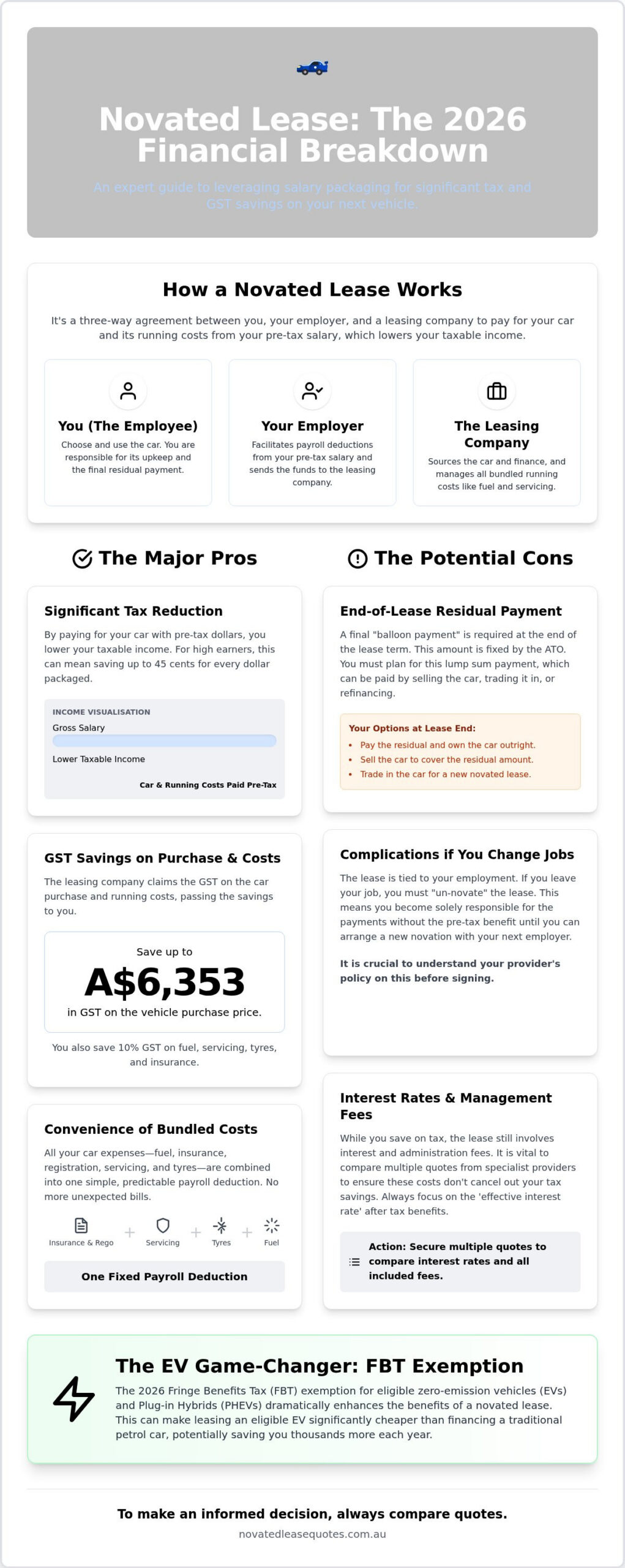
- Weigh the novated lease pros and cons by comparing upfront GST savings of up to A$6,353 against the requirement of an end-of-lease residual payment.
- Identify how the 2026 FBT exemption on eligible electric vehicles can significantly outperform traditional petrol car financing.
- Understand the implications of “un-novating” a lease if you change jobs and how to maintain flexibility in your contract.
- Use a specialised calculator and quote comparison service to ensure you’re securing the most competitive interest rates and management fees.
The Financial Logic: Why Novated Lease Pros and Cons Matter in 2026
A novated lease is a salary packaging arrangement between you, your employer, and a finance provider. What is a novated lease? essentially describes a method where your car payments and running costs are deducted from your salary before tax is applied. It’s a strategic move. By paying for your vehicle this way, you reduce your taxable income, meaning the ATO takes a smaller cut of your hard-earned pay.
In 2026, with the average Australian household spending A$24,484 annually on transport, evaluating the novated lease pros and cons is a necessity for anyone looking to protect their cash flow. You shouldn’t just look at the headline interest rate. Instead, focus on the effective interest rate. This figure accounts for the tax you aren’t paying, which often makes the lease significantly cheaper than a standard car loan from a bank. Using a dedicated calculator for 2026 tax rules allows you to model these savings before signing. Since interest rates vary, comparing multiple specialist quotes is the only way to ensure the finance costs don’t outweigh the benefits.
How Salary Packaging Reduces Your Taxable Income
The mechanics are straightforward but powerful. When you package a vehicle, your employer pays the lease and running costs using your pre-tax salary. This lowers your gross income. If you’re in a high tax bracket, every dollar packaged can save you up to 45 cents in tax. This reduction also impacts your Medicare Levy, which is calculated as a percentage of your taxable income. In 2026, tax optimisation is the most effective way to offset rising fuel and insurance premiums. It’s about making your salary work harder for you.
The Tripartite Agreement: Who is Responsible for What?
This arrangement relies on a three-way partnership where each party has specific duties to keep the lease running smoothly:
- The Employer: They facilitate the payroll deductions and remit those funds to the leasing company.
- The Leasing Company: They source the finance, manage the fuel cards, and oversee the bundled running costs like servicing and insurance.
- The Employee: You remain the owner of the vehicle. You’re responsible for its upkeep and the residual value, often called a balloon payment, due at the end of the term.
Understanding these roles helps you see the novated lease pros and cons clearly. While the employer provides the gateway to tax savings, the employee retains the ultimate responsibility for the vehicle asset.
The Major Pros: Why Australian Professionals Package Their Cars
The primary appeal of salary packaging a vehicle lies in the immediate and ongoing financial relief it provides compared to traditional finance. When evaluating the novated lease pros and cons, the “pro” column is heavily weighted by the ability to bypass retail costs that everyday consumers simply cannot avoid. It isn’t just about the tax bracket. It’s about the institutional leverage you gain through the tripartite agreement.
GST Savings on Purchase and Running Costs
The most visible benefit is the GST treatment. When you purchase a car through a lease, the provider claims the 10% GST on the purchase price as an input tax credit. This effectively lowers the amount you need to finance from day one. In 2026, an Australian employee can save up to $6,191 in GST on the purchase of a vehicle, depending on the car’s value. These savings don’t stop at the dealership. You also avoid paying GST on your ongoing expenses. Whether you’re paying for a set of new tyres, a scheduled service, or a tank of fuel, the 10% GST component is effectively removed from the cost. Over a three to five-year lease, these small increments build into thousands of dollars in retained wealth.
Beyond tax, you benefit from wholesale pricing. Large leasing providers manage thousands of vehicles. This gives them significant “fleet” buying power with dealerships across Australia. They often secure discounts that a private buyer walking into a showroom couldn’t hope to negotiate. This lower starting price means you’re financing a smaller amount. It reduces your monthly repayments and the total interest paid over the life of the lease.
The Power of Bundled Running Costs
Managing a car can be a logistical headache. Between registration renewals, insurance premiums, and fluctuating fuel prices, it’s easy for your monthly budget to feel unpredictable. A novated lease solves this by bundling every expense into a single, predictable deduction. This “set and forget” approach is particularly valuable for busy professionals who want to avoid the stress of large, unexpected bills. Your fuel, maintenance, and comprehensive insurance are all handled for you. You can find more detail on what’s included in our novated lease running costs guide.
This level of convenience combined with significant tax efficiency makes it a formidable choice for those in middle to high income brackets. If you’re still weighing the novated lease pros and cons, the best next step is to run your own numbers. You can establish your potential savings by using a novated lease calculator to see how these advantages apply to your specific salary.
The Potential Cons: Trade-offs and Considerations to Watch
While the tax efficiency is compelling, a pragmatic review of novated lease pros and cons must address the long-term obligations. A lease isn’t a traditional car purchase; it’s a financial structure that requires careful management over its entire term. Understanding the potential downsides ensures you aren’t surprised by costs that occur outside the monthly deduction cycle.
One primary consideration is job mobility. Because the lease is a tripartite agreement, it’s tied directly to your current employer. If you resign or your role is made redundant, the lease becomes “un-novated.” You then become responsible for the full monthly payments from your post-tax income until you either pay out the lease or find a new employer willing to take over the arrangement. This can create significant financial pressure during a career transition.
Understanding the Residual Value Obligation
The ATO mandates that every novated lease must have a residual value, often called a balloon payment. This exists to prevent employees from using pre-tax dollars to acquire an asset for nothing. You don’t own the car outright until this final payment is made. At the end of your term, you generally have three choices: pay the residual to own the car, sell the vehicle to cover the cost, or refinance the residual into a new lease. The risk here is negative equity. If the used car market softens and your vehicle’s value drops below the pre-set residual amount, you’ll need to make up the difference from your own pocket.
Impact on Mortgages and Future Credit
A common oversight is how a lease affects your borrowing capacity. When you apply for a home loan, lenders view your lease payment as a fixed financial commitment. Even though you’re saving on tax, the bank sees a dedicated monthly liability that reduces your discretionary income. This can lower the maximum amount a bank is willing to lend you for a mortgage. It’s a vital factor for first-home buyers or those looking to upgrade their property.
However, the tax savings do increase your net take-home pay. To understand how this balance shifts for your specific situation, you should use a novated lease calculator to see the real impact on your net income. Finally, if you aren’t choosing an exempt electric vehicle, you must account for Fringe Benefits Tax (FBT). Most providers manage this through the Employee Contribution Method, which involves using some post-tax salary to offset the tax. This is a standard practice, but it does reduce the “pure” pre-tax benefit of the arrangement.
The EV Factor: How FBT Exemptions Change the Pros and Cons
The 2026 financial year has cemented the electric vehicle (EV) as the most potent tool for salary packaging. While the core novated lease pros and cons remain constant for internal combustion engines, the federal FBT exemption for zero-emission cars has created a massive incentive. This exemption effectively removes the tax barrier that previously limited savings for those choosing high-value vehicles. It’s no longer just about fuel savings; it’s about a fundamental shift in how the ATO treats your car as a benefit.
Why EVs are the “Gold Standard” for Novated Leasing
Under current ATO rules, eligible electric vehicles and hydrogen fuel cell cars are exempt from Fringe Benefits Tax. This means that 100% of your lease payments and running costs can be paid from your pre-tax salary. “An EV novated lease can effectively double the tax savings of a traditional petrol vehicle lease due to the federal FBT exemption.” You can explore the specific eligibility criteria in our EV novated lease Australia guide. This makes the “pro” list for EVs significantly more attractive than any other vehicle type.
Packaging an EV also allows you to bundle your electricity costs. Whether you use public fast-chargers or install a smart charger at home, these expenses are managed within your pre-tax budget. It’s a significant shift from petrol cars where you’re constantly at the mercy of fluctuating pump prices. In 2026, staying under the A$91,661 luxury car tax threshold for fuel-efficient vehicles is the key to maximising this benefit. If the car exceeds this value, the tax treatment changes, so choosing the right model is essential for your bottom line.
The Disadvantage of High-Emission Vehicles
Choosing a traditional petrol or diesel vehicle changes the math. For these cars, FBT is usually calculated using the statutory formula method, which assumes a benefit of 20% of the car’s base value. This tax “eats” into your potential savings, often requiring a portion of your lease to be paid from post-tax income to offset the liability. For large SUVs or high-performance petrol cars, the FBT cost can sometimes neutralise the income tax savings entirely, especially for those in lower tax brackets.
A critical update for 2026 is the status of Plug-in Hybrid Electric Vehicles (PHEVs). Since 1 April 2025, new leases for PHEVs no longer qualify for the FBT exemption. If you’re looking for the maximum tax advantage, a full battery electric vehicle is now the only way to achieve zero FBT. High-income earners in the 45% tax bracket see the most dramatic difference here. The lack of FBT means they aren’t just saving on the car; they’re shielding a massive portion of their income from the highest tax rate. To see how these 2026 rules apply to your next car, get a tailored novated lease quote and compare the real-world savings between petrol and electric models.
Making the Decision: How to Compare Quotes and Maximise Savings
Deciding to package a vehicle is a significant financial commitment. To move from research to execution, you need a structured approach that prioritises transparency. While the tax benefits are clear, the final value of the arrangement depends on the specific terms of your contract. Navigating the novated lease pros and cons requires a methodical comparison of the market to ensure you aren’t overpaying for finance or administration.
Follow these five steps to secure the best possible outcome:
- Step 1: Use a calculator to establish your baseline savings based on your 2026 tax bracket.
- Step 2: Get multiple quotes to compare interest rates, as these can vary significantly between specialist providers.
- Step 3: Consult your employer’s salary packaging policy to confirm which providers they permit and any internal admin fees.
- Step 4: Assess your job stability. Since these agreements typically run for 3 to 5 years, you need confidence in your continued employment.
- Step 5: Select the right vehicle. As discussed, choosing an EV under the A$91,661 threshold is currently the most efficient path.
Comparing More Than Just the Monthly Payment
A common mistake is focusing solely on the monthly deduction. You must look deeper into the fee structure. Many providers include an “Admin Fee” for managing the account and a “Procurement Fee” for sourcing the car. These aren’t always transparent. You should also check the assumptions made for your running costs. If the budget for tyres or insurance is unrealistically low, you’ll face out-of-pocket expenses later. Using a novated lease comparison service is the most efficient way to benchmark these costs against the industry standard.
The Verdict: Is a Novated Lease Worth It?
For most Australian professionals, particularly those in higher tax brackets, the answer is a definitive yes. The combination of GST savings and reduced taxable income creates a level of efficiency that traditional car loans can’t match. This is especially true for electric vehicles, where the FBT exemption can effectively double your savings. However, if you’re in the lowest tax bracket or expect to change employers within the next six months, the setup costs and “un-novating” risks might outweigh the benefits. If you’re ready to see the exact numbers for your situation, Get your tailored novated lease quotes today.
Optimise Your Vehicle Finance for 2026
Navigating the novated lease pros and cons requires a clear understanding of your financial goals and tax bracket. While the tax savings on running costs and the significant FBT exemptions for electric vehicles are powerful incentives, success lies in the details of the contract. You must account for residual values and ensure the interest rate remains competitive against traditional finance. It’s about turning a necessary expense into a strategic asset for your household budget.
By using an independent comparison service, you can bypass the complexity of the 2026 ATO tax rules and focus on the bottom line. Our platform provides access to quotes from leading Australian providers, ensuring your comparison is objective and tailored to your specific salary packaging needs. Compare Novated Lease Quotes and Save Thousands today. With the right data and a clear comparison, you can drive your new car with the confidence that your finances are fully optimised.
Frequently Asked Questions
Is a novated lease worth it if I only earn A$60,000 a year?
A novated lease is often worth it at this income level, especially if you select an eligible electric vehicle. While your income tax savings are lower than a high-income earner’s, you still benefit from the 10% GST discount on the purchase price and all running costs. You should use a calculator to ensure the provider’s administration fees don’t exceed the tax savings for a traditional petrol vehicle.
What happens to my novated lease if I am made redundant?
If you are made redundant, the lease becomes “un-novated,” meaning the tripartite agreement between you and your employer ends. You remain responsible for the monthly finance payments, but these must now be paid from your post-tax income. Most providers allow you to transfer the lease to a new employer or pay out the remaining balance if you decide to sell the vehicle during your transition.
Can I include a used car in a novated lease agreement?
You can include a used car in a lease, provided it meets the age and condition requirements set by the finance provider. Generally, the vehicle must be less than 10 to 12 years old by the end of the lease term. This is an effective way to lower your total finance amount while still accessing the tax benefits of salary packaging your fuel, tyres, and servicing costs.
Does a novated lease affect my HECS/HELP debt repayments?
A novated lease can increase your HECS/HELP repayments because the ATO uses your “reportable fringe benefits” to determine your repayment threshold. While your taxable income is lower, the grossed-up value of the car benefit is added back for debt assessment purposes. It’s vital to model these novated lease pros and cons with a specialist to ensure you don’t face an unexpected bill at tax time.
Can I pay off my novated lease early?
You can pay off your lease early by requesting a payout figure from your provider. This amount includes the remaining principal and the residual value, plus any early termination fees specified in your contract. While this grants you full ownership of the car, you’ll lose the ongoing tax advantages. Many drivers prefer to sell the car and use the proceeds to cover the payout instead.
Is insurance included in a novated lease?
Comprehensive insurance is almost always included and bundled into your single, predictable monthly deduction. Most providers give you the choice of using their fleet insurance rates or nominating your own preferred insurer. Because the premium is paid using your pre-tax salary, you effectively save the 10% GST and your marginal tax rate on the cost of the policy every year.
How does the residual value work at the end of the lease?
The residual value is a mandatory balloon payment required by the ATO to prevent the car from being purchased entirely tax-free. At the end of your term, you must pay this amount to own the vehicle, sell the car to cover the balance, or refinance the residual into a new lease. Understanding this obligation is a critical part of evaluating the novated lease pros and cons for your budget.
Will a novated lease stop me from getting a home loan?
A novated lease won’t necessarily stop you from securing a home loan, but it will impact your borrowing capacity. Lenders view the lease payment as a fixed monthly liability, which can reduce the total amount a bank is willing to lend you. Conversely, the increase in your net take-home pay can sometimes assist with your serviceability assessment, depending on the specific lender’s internal policies.


